What’s Normal, What’s Not, and When to See a Doctor
- The menstrual cycle is a vital sign of a woman’s overall health—not just fertility.
- A “normal” cycle varies, but most adult women menstruate every 21–35 days, with bleeding lasting 3–7 days.
- Pain, irregularity, or heavy bleeding should not automatically be ignored or normalised.
- Stress, anemia, PCOS, thyroid disorders, and endometriosis are common causes of menstrual changes among Filipino women.
- Tracking your cycle helps you notice patterns and know when to seek medical advice.
- Affordable menstrual health services are available in both public and private healthcare settings in the Philippines.
Disclaimer & Medical Advice
This article is provided for educational purposes only and does not replace consultation with a licensed OB-GYN or qualified healthcare professional. Menstrual patterns vary widely, and what is normal for one woman may not be normal for another. If you experience persistent or concerning symptoms, consult a healthcare provider for personalised assessment and care.
Why Understanding Your Menstrual Cycle Matters
For many Filipino women, learning about menstruation doesn’t happen in a clinic or a classroom.
It happens quietly—through a hurried reminder from a mother, advice from an older sister, or by figuring things out alone once periods begin. Pain is expected. Irregular cycles are brushed off. Missing a period is often blamed on puyat, stress, or being “busy lang.”
Over time, many women learn to endure their menstrual cycle rather than understand it.
But your menstrual cycle is more than a monthly inconvenience. It is a window into your hormonal, metabolic, and reproductive health.
Changes in your cycle can reflect:
- Hormonal balance (or imbalance)
- Nutritional status (such as iron levels)
- Stress and lifestyle factors
- Underlying conditions like PCOS, thyroid disease, or endometriosis
Understanding what is normal—and what is not—helps you:
- Advocate for yourself during medical consultations
- Seek care earlier rather than later
- Make informed decisions about contraception, fertility, and overall wellbeing
What Is the Menstrual Cycle?
Your menstrual cycle is a monthly series of hormonal changes that prepare your body for a possible pregnancy. If pregnancy does not occur, the uterus sheds its lining—this is your period.
A full cycle is counted from the first day of your period to the first day of your next period.
While the process is biological, the experience is deeply personal. No two women experience their cycle in exactly the same way—which is why understanding the range of what’s normal matters.
The Four Phases of the Menstrual Cycle
1. Menstrual Phase (Your Period)
This is the phase most women are familiar with—and often the most disruptive to daily life.
What happens:
The uterus sheds its lining, resulting in menstrual bleeding.
Typical duration:
3–7 days
Common experiences:
- Vaginal bleeding
- Mild to moderate cramps
- Fatigue
- Lower back discomfort
Some discomfort is common. However, pain that interferes with work, school, commuting, or daily responsibilities is not considered normal.
2. Follicular Phase
As bleeding tapers off, many women notice a gradual shift—physically and mentally.
What happens:
Hormones stimulate the ovaries to prepare an egg for ovulation. The uterine lining begins to thicken again.
How you might feel:
- Gradually increasing energy
- Clearer thinking
- Improved mood
- This phase overlaps with menstruation and continues until ovulation.
3. Ovulation
Ovulation often passes unnoticed, but for some women, it comes with subtle signs.
What happens:
An egg is released from the ovary and can be fertilised for about 12–24 hours.
Possible signs:
- Clear, stretchy vaginal discharge
- Mild lower abdominal pain (mittelschmerz)
- Increased libido
Not noticing ovulation symptoms does not mean something is wrong.
4. Luteal Phase
In the days leading up to your next period, many women become more aware of their bodies.
What happens:
The body prepares for a possible pregnancy. If fertilisation doesn’t occur, hormone levels drop.
Common experiences:
- Breast tenderness
- Bloating
- Mood changes
- Food cravings
- PMS symptoms
If these symptoms feel overwhelming or disruptive month after month, it may signal hormonal imbalance rather than “normal PMS.”
What Is Considered a “Normal” Menstrual Cycle?
Normal does not mean pain-free or identical to someone else’s cycle.
It means consistent and manageable for your body.
Cycle Length
- Adults: 21–35 days
- Teenagers: Cycles may be longer or irregular in the first few years after menarche
A cycle that consistently falls outside this range may need evaluation.
Period Duration
- 3–7 days is typical
- Shorter or longer periods can still be normal if consistent for you
Flow Amount
Flow varies widely, but warning signs include:
- Soaking a pad or tampon every 1–2 hours
- Passing large clots regularly
- Bleeding longer than 7 days
Many women adjust their routines around heavy flow without realising it may contribute to iron-deficiency anemia, a common condition among Filipino women.
Pain and Discomfort
Mild cramps are common.
But if pain regularly forces you to cancel plans, miss work, or rely heavily on pain medication, it should not be dismissed as “tiis lang.”
Menstrual Changes Across Life Stages
Teens and Early 20s
Irregular cycles are common as hormones mature. Missed periods may happen during stressful school years or weight changes.
Still, very painful or extremely heavy periods are not something teens should simply outgrow without evaluation.
30s
In this stage, many women begin to notice subtle changes:
- Stress from work and family responsibilities
- Hormonal shifts
- Pregnancy, childbirth, and breastfeeding
Conditions like PCOS or thyroid disorders may become more apparent during this time.
40s and Perimenopause
Many Filipino women are not taught about perimenopause, leading to confusion and anxiety.
Common changes include:
- Shorter or longer cycles
- Heavier or lighter bleeding
- Increased PMS symptoms
While these changes are common, they should still be discussed with a doctor—especially if they affect quality of life.
What’s NOT Normal (And Shouldn’t Be Ignored)
If you find yourself planning your life around your period, it may be time to pause and reassess.
Seek medical advice if you experience:
- No period for 3 months or more (when not pregnant or breastfeeding)
- Severe menstrual pain that limits daily activities
- Very heavy bleeding or bleeding longer than 7 days
- Bleeding between periods or after sex
- Sudden major changes in cycle pattern
- Symptoms of anemia (fatigue, dizziness, shortness of breath)
These are signals, not overreactions.
Common Causes of Menstrual Problems in the Philippines
Stress and Lifestyle Factors
Long work hours, long commutes, lack of sleep, and emotional stress can quietly disrupt hormonal balance.
Iron-Deficiency Anemia
National health surveys show anemia remains prevalent among Filipino women, often due to:
- Heavy menstrual bleeding
- Inadequate dietary iron
Many women feel chronically tired without realising their period may be contributing.
Polycystic Ovary Syndrome (PCOS)
PCOS is often underdiagnosed locally.
Possible signs include:
- Irregular or absent periods
- Acne or excess hair growth
- Weight changes
Early diagnosis allows better long-term health management.
Endometriosis
Endometriosis can take years to diagnose because pain is often normalised.
Common signs:
- Severe period pain
- Pain during intercourse
- Chronic pelvic pain
Painful periods should not automatically be accepted as normal.
Thyroid Disorders
Thyroid conditions can quietly affect menstruation, energy levels, and weight, often without obvious warning signs.
Myths and Facts About Menstruation (Philippine Context)
Myth: “Masakit talaga ang regla. Tiisin mo lang.”
Fact: Severe pain is not normal and deserves medical attention.
Myth: “Hindi regular ang regla ko, pero okay lang yan.”
Fact: Persistent irregularity can signal hormonal or metabolic issues.
Myth: “Pag may period ka, hindi ka pwedeng magpatingin.”
Fact: You can consult an OB-GYN anytime—even during your period.
How to Track Your Menstrual Cycle
Tracking helps you notice patterns before they become problems.
What to Track
- Start and end dates of your period
- Flow intensity
- Pain level
- Mood and energy
- Other symptoms (headache, bloating)
How to Track
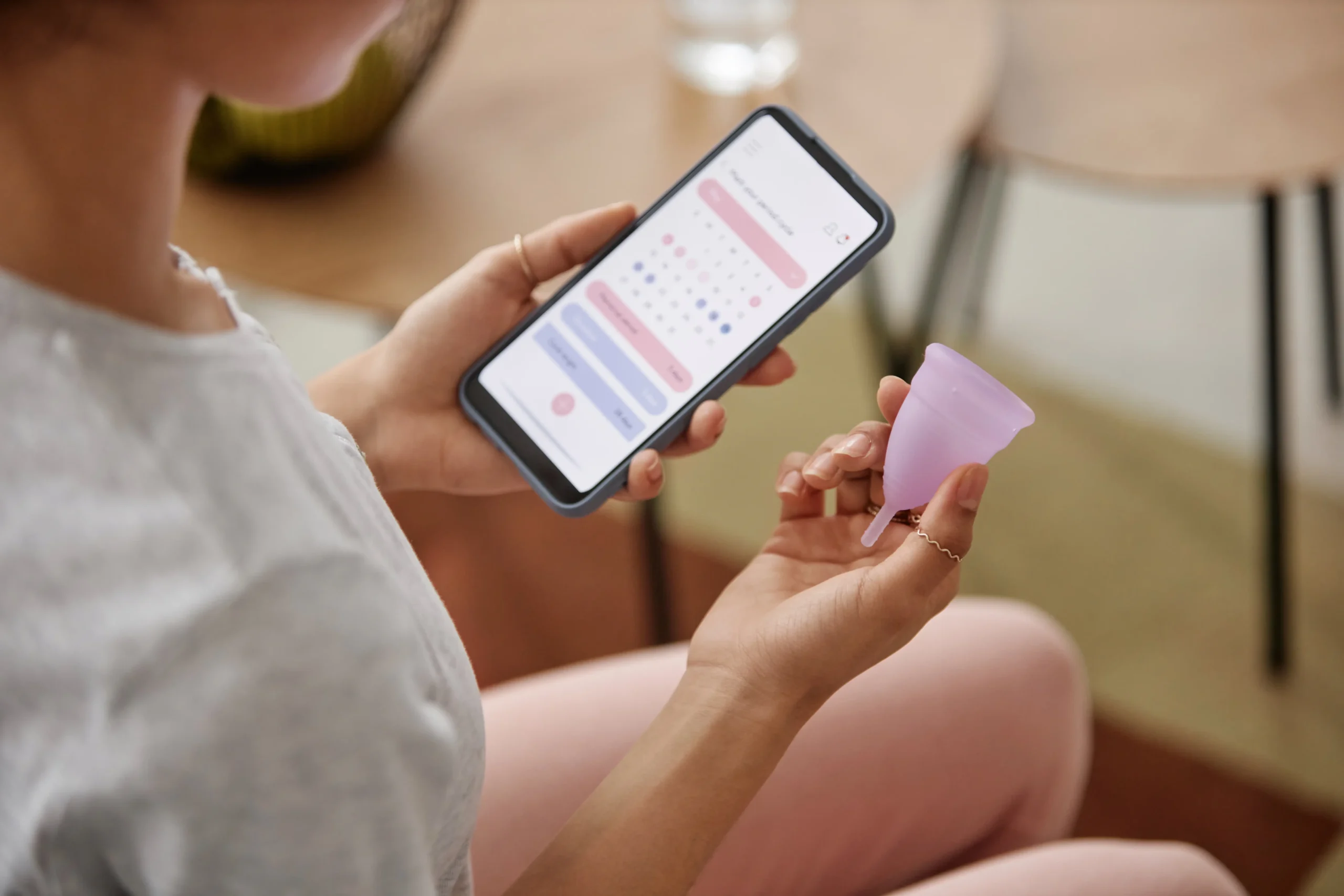
- Calendar method
- Mobile apps
- Simple notebook or notes app
Consistency matters more than perfection.
When Should You See a Doctor?
Consider consulting an OB-GYN if:
- Your symptoms affect daily life
- You feel something is off—even if tests were normal before
- You are planning pregnancy or contraception
- You want clarity, not just reassurance
A consultation may include:
- Medical history
- Physical exam
- Ultrasound
- Blood tests (hormones, iron levels)
Where to Get Help in the Philippines
Public Health Options
- Barangay health centers
- Government hospitals
- PhilHealth-covered consultations and tests
Many women’s health services are free or subsidised.
Private Clinics
- OB-GYN clinics
- Women’s health centers like Eluvo
Private care may offer shorter wait times and more comprehensive evaluations.
Public Health Context
Many Filipino women delay seeking care—not because symptoms are mild, but because life gets in the way. Clinic visits take time, money, and emotional energy.
Improving menstrual health literacy helps women seek care earlier and make informed choices.
Key Menstrual Health Terms in Tagalog
- Menstrual cycle – siklo ng regla
- Irregular period – hindi regular na regla
- Heavy bleeding – malakas na pagdurugo
- Menstrual pain – pananakit ng puson
- OB-GYN – doktor para sa kalusugan ng kababaihan
Frequently Asked Questions
Is it normal to miss a period due to stress?
Yes, stress can delay ovulation—but repeated missed periods should be evaluated.
Can birth control affect my cycle?
Yes. Hormonal methods can change bleeding patterns, especially in the first few months.
When is period pain a sign of something serious?
When pain is severe, worsening, or interferes with daily life.
Can I have PCOS even if I still get periods?
Yes. PCOS does not always mean absent periods.
Your Cycle Is Worth Understanding
Many women spend years adjusting their lives around their period—accepting pain, unpredictability, or exhaustion as part of being a woman.
But your menstrual cycle is not something to endure quietly.
It is information—about your body, your hormones, and your overall health.
Paying attention to it is not overreacting.
It is a form of self-care.
If something feels off, you deserve answers—not dismissal. Consultation with a qualified OB-GYN can help you understand your cycle and address concerns early. At Eluvo, our team is here to support Filipino women with clear, compassionate, and evidence-based care.